AI-native evidence readiness—so you know what's missing before the audit
PEDCO AuditPro uses advanced AI and a process knowledge graph to assess evidence completeness and strength across your scope—highlighting gaps early and making readiness measurable over time.
Why it matters
Evidence gaps are rarely visible until it's too late. Teams only discover missing or weak proof during audit preparation, which triggers last-minute collection, inconsistent quality, and unnecessary risk.
PEDCO AuditPro makes readiness proactive by using AI to understand and structure your documentation and evidence, then continuously measuring completeness and strength against what's expected for each scope.
What this capability delivers
Evidence sufficiency scoring that clearly shows what's sufficient, weak, or missing
Readiness views by site, project, program, supplier, or standard scope
Early-warning signals to reduce audit surprises
Clear prioritization so teams focus on the highest-impact gaps
A measurable baseline to improve evidence quality over time
Readiness in action
Continuous visibility into evidence completeness and strength
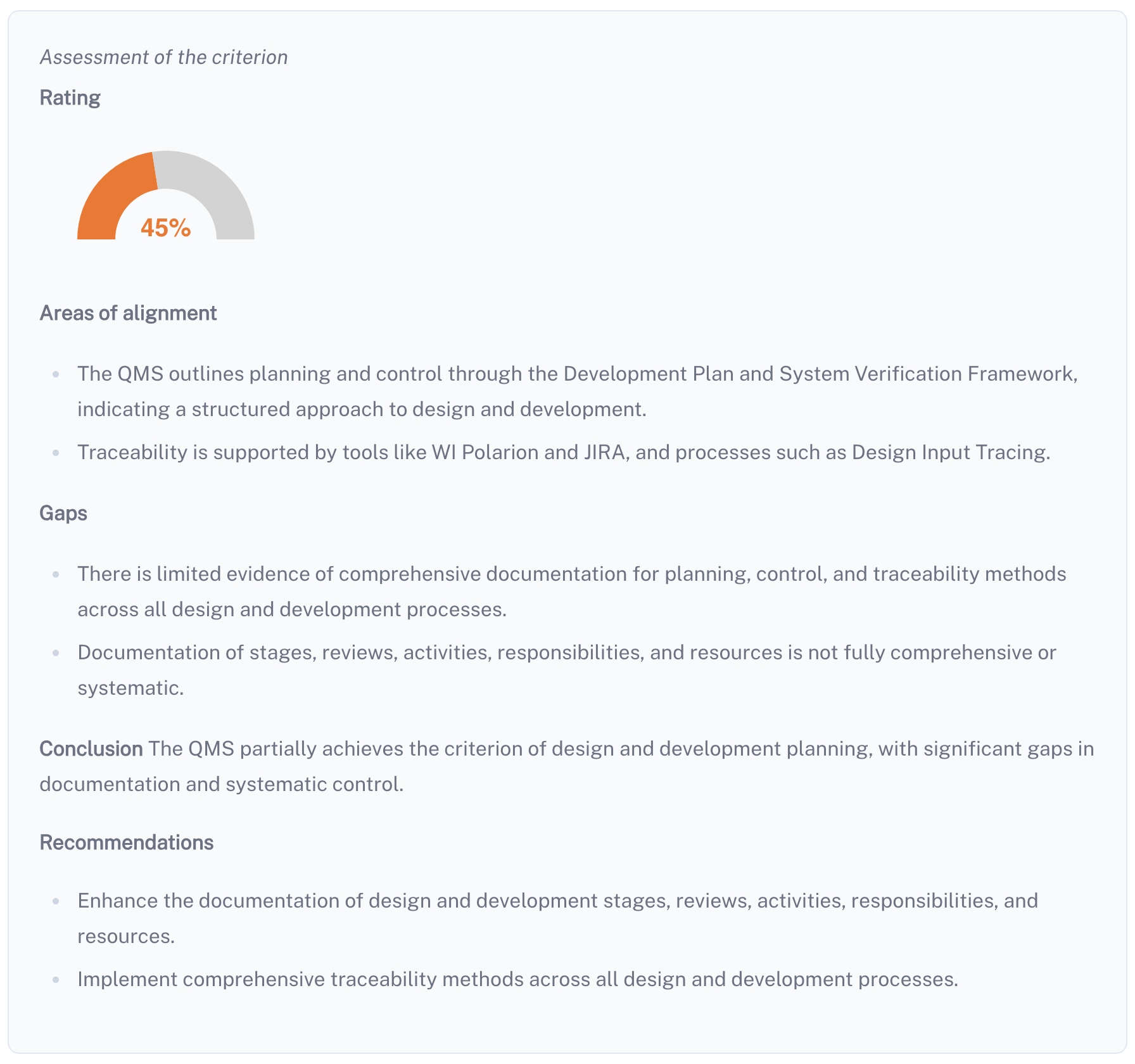
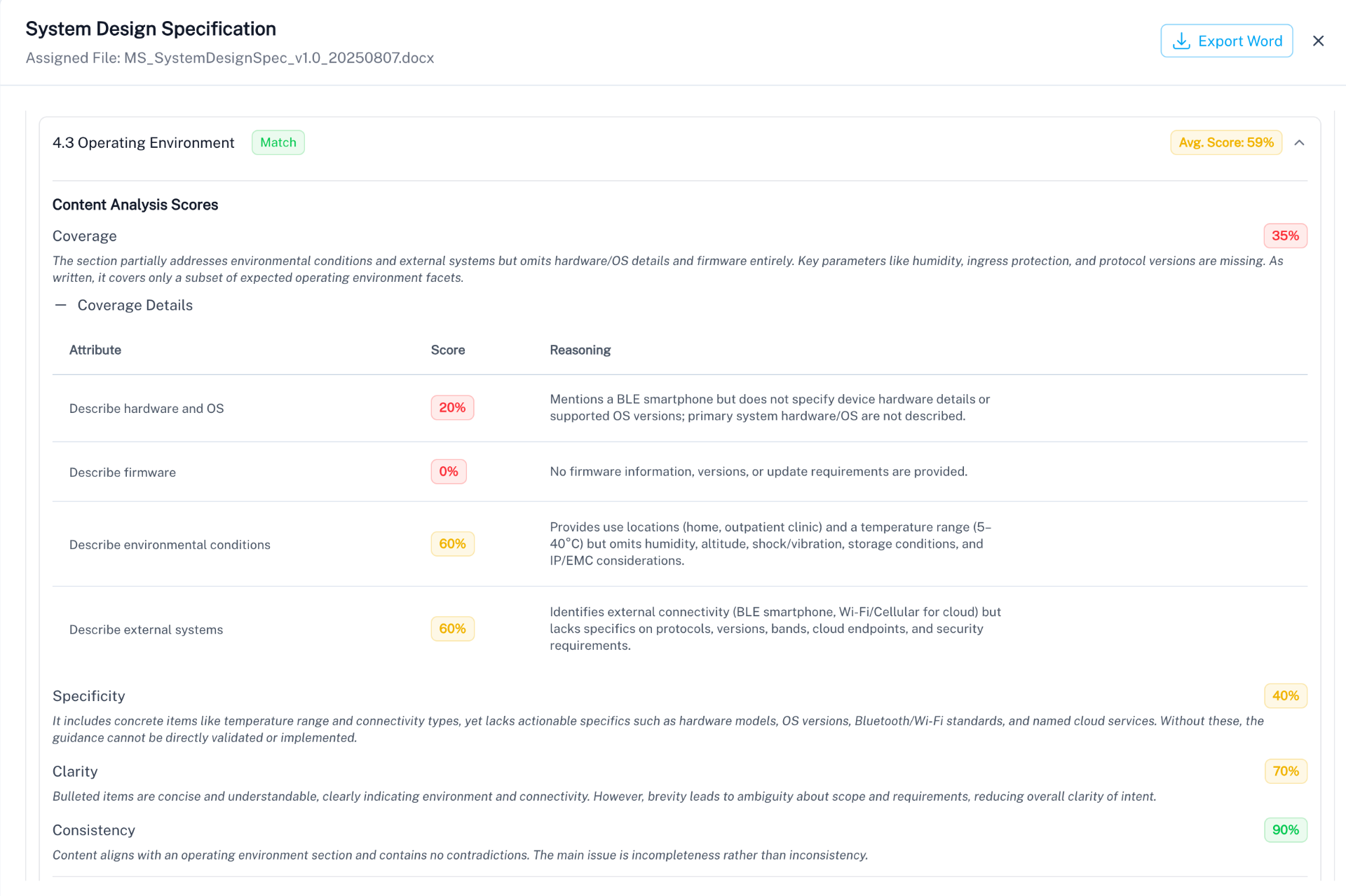
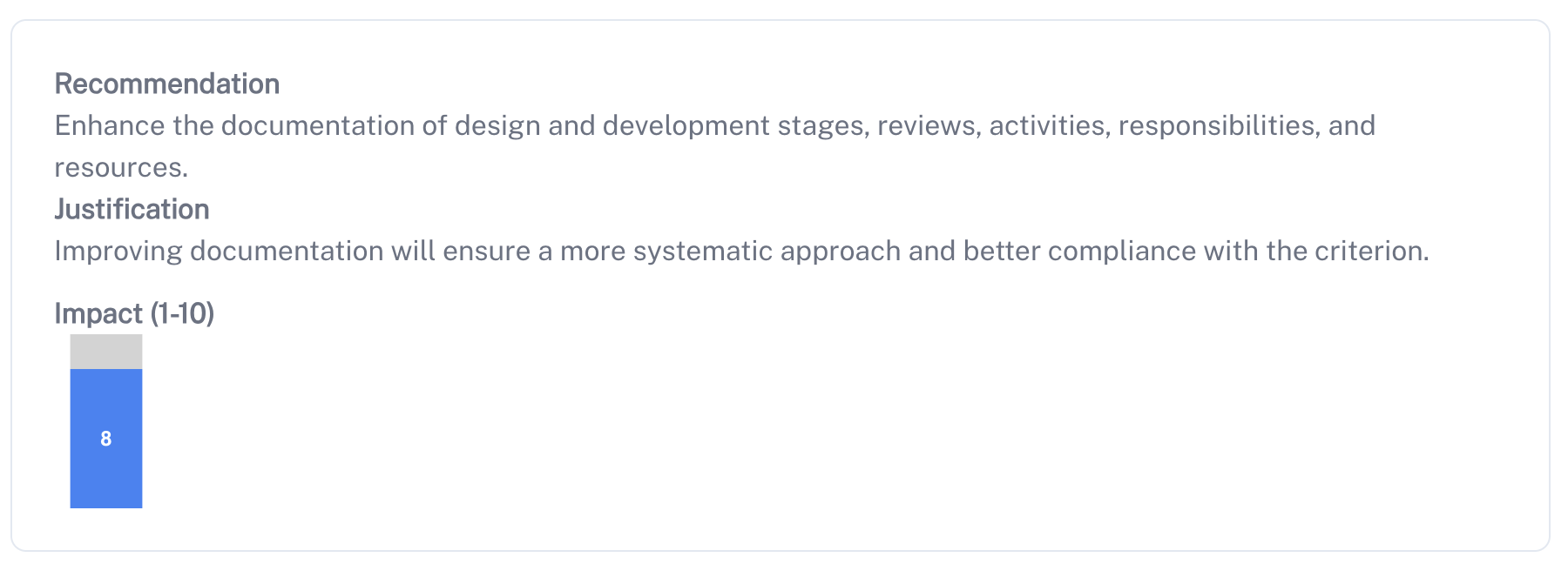
Sufficient, weak, or missing indicators
By site, project, program, or scope
Prevent last-minute scramble
Focus on highest-impact gaps
How it works (high level)
PEDCO AuditPro combines three elements to enable proactive readiness assessment
AI-based content understanding
To interpret unstructured QMS documents and supporting artifacts
Process knowledge graph
To connect requirements, processes, and evidence expectations within each scope
Continuous evaluation
To identify where evidence is incomplete, weak, or outdated—before audit cycles begin
When paired with Evidence Mapping & Traceability, every gap can be drilled down to the exact missing or weak evidence location.
UI + API
Integrated, not separate
UI: readiness visibility and "audit room" workflows
- Readiness dashboards with clear status by scope
- Drill-down into what's missing and why it matters
- Evidence inventories that stay current as sources change
API: automate readiness signals and schedules
- Pull readiness scores into governance dashboards and portals
- Schedule readiness checks ahead of audits, milestones, or quarterly reviews
- Trigger automated audit-pack generation as part of audit cycles
Common use cases
Audit preparation
Keep evidence packs continuously current
Multi-site governance
Ensure comparable readiness across plants and regions
Program milestones
Verify evidence readiness before key reviews
Supplier oversight
Identify recurring evidence weaknesses across supplier deliverables
Outputs you get
Evidence readiness and sufficiency scores by scope
Structured lists of missing/weak evidence areas
Export-ready evidence inventories with consistent structure—no last-minute formatting
Built for scale: Readiness scoring is produced automatically across large, unstructured repositories—powered by AI-native understanding and a knowledge-graph foundation.